
Should You Participate in an Amusement Auction?
by Jack Guarnieri, Jersey Jack Pinball & PinballSales.com

Many years ago, I’d faithfully get the Sunday New York Times and look at the back pages for the weekly advertised auctions. There were a lot of listings for restaurant equipment, automobiles, distressed merchandise, yard equipment, estate sales, electronics, furniture, collectibles and all kinds of things. And once in a while, there’d be a listing for arcade games.
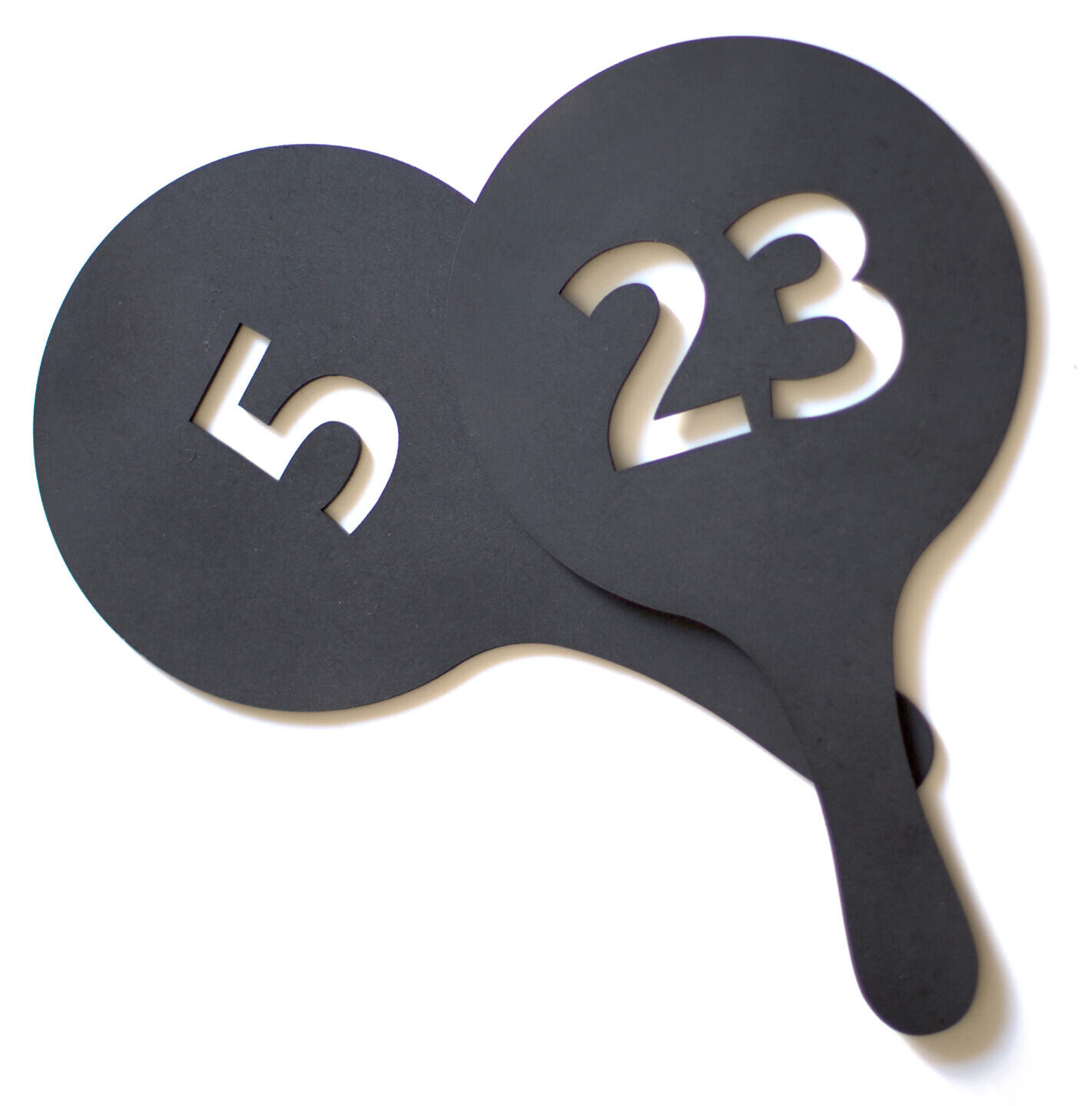
Out of curiosity, in 1980, I went to one of those game auctions. What did I know? Not much, but boy did I learn! First, you had to register, and if you would resell whatever item you won, you’d need to sign an exempt certificate and other things so you didn’t have to pay the state sales tax. At some auctions, you had to put down $100 in trust money, which would either be deducted if you bid, or returned if you didn’t. I guess that eliminated the people who couldn’t scrape $100 together! There was an 18% seller’s premium and a 20% buyer’s premium, the auctioneer’s fee for selling the item. Anyway, when registered you’d receive your bidder’s number and a “paddle” you raised to bid.
So I’m at my first auction, which happens to be in Coney Island, and what I didn’t know was that back then, one family basically owned all the amusement games in several arcades. Every year, they’d get rid of the dead wood through their auctions, tossing in a few cherries to attract a crowd. These were sprinkled through the later lots, keeping everyone in attendance until the end of the auction, a lot like milk at the back of the supermarket.
There were some classics at this auction – big, mechanical arcade games from Chicago Coin, rifle shooting games, electro-mechanical pins and early videos (Stars, Ramtek’s Tank, Kee Games’ Tank II, Midway’s Gunfight, 280 ZZZAP, Wheels, Death Race and more).
The auctioneer was a short guy with a clipboard – let’s call him Mike – who climbed up a few steps on a ladder so everyone could see him, and so he could look out over the whole group to spot bidders. He had a few big goons who’d move the ladder and shadow him. Mike seemed to be right out of central casting (it’s Brooklyn, after all) – 5’ 3” tall, wearing a dark suit and tie with a dark long overcoat. He climbed up a few steps on the ladder and explained the rules: raise your hand, show the number, nod your head, everything is final sale, everything must be removed by tomorrow at 6 p.m., they were not liable for anything, the buyer’s premium and sales tax would be added if you weren’t exempt, etc. Let’s go already!

A few hours prior to the start of the auction, there was an inspection period so we could look at the numbered “lots” (that’s what each item is called). At fancier auctions, there’s an auction guide complete with pictures and descriptions of each item, as well as an expected sale price. Not here though. What we had to review were a few sheets of paper with a numerical list and the names of the games. During inspection, I played several that worked fine and a few that had joystick or other issues. The pinballs were mostly working and clean; the rifle games were not for me. But looking back, I wish I’d bought them all.
It was finally show time and the auction started. “Lot number 1,” shouts Goon #1. “Atari Gran Trak 10 racing game, Mr. Auctioneer!” Mike asks, “Who’ll start the bidding at $500?”
Nobody made a move or a peep. Mike comes back with, “Who’ll start the bidding at $400?” Again, nothing. Mike drops it to $200 and finally gets some action. After the first bid, it starts moving up… $225…$250…$275… It stalls a bit and Mike calls out, “I’ve got $275 and do I hear $300?” Goon #2 then says, “No money for that piece Mr. Auctioneer.” So, Mike then extols virtues of the item, in this case, the first commercial driving game, how it plays great, etc. Then someone bids $300, another at $400, and the first bidder comes back in with $500. No more bidders, “SOLD to #63!” Mike says, telling #63 to “give that guy over there a couple hundred bucks deposit.” The money is given to Goon #3 and accounted for by Goon #4 who gives bidder #63 a receipt for the deposit on lot #1. Are you still with me?
After several more lots, I start to notice a few things and question just who is doing the bidding? For some machines, I can see people bid, but for others, I just see Mike nodding his head in the direction of someone. Huh? I learn that the opening ask bid is almost always his desired price target. If he opens at $600, he’s looking for $600 or better. Mike also controls the bid spread. $25 increments may not be good enough to get to the target price, so in that case, he’ll only accept in $50 increments. Hmm, okay.
Several more items sell, and now I see a good game I played coming up – Atari’s Asteroids – but notice that now it’s turned off. Goon #2 says, “Lot 35, Atari Asteroids,” somehow managing to mispronounce the name Atari. “Mr. Auctioneer,” he says, “This game was working earlier but it’s broke now,” and everyone laughs. Mike says, “Well okay, lot #35 who’ll give me $100? Quickly, he says, “Number 87, $100,” and just like that, it’s all done, the hammer hits and it’s “Sold to #87!” The odd thing is that Mike doesn’t ask bidder 87 to give any deposit money to Goon #3.
It was all a bit shady and, back then, I learned that auctions happened in the shadow of daylight. Thankfully, those shadier times are behind us, and today’s auctioneers are honest, transparent and tech-savvy businesspeople. So back to my original question, should you participate in an auction for amusement equipment? Absolutely! Sold!
Jack Guarnieri started servicing electro-mechanical pinball machines in 1975 and has been involved in every phase of the amusement game business since then. He was an operator in NYC, then began a distributorship in 1999, PinballSales.com, selling coin-op to the consumer market. In January of 2011, he founded Jersey Jack Pinball (named after his RePlay Magazine pen name), which builds award-winning, full-featured, coin-op pinball machines. Email Jack at [email protected].